

From Singapore to the World: Showcasing Streamap's Global Competitiveness in Road AI
 0
 Aug 24, 2026
Industry Insights from the Singapore Summit
On August 21, the 31st Singapore Pavement Technology Symposium (SPT 2026) concluded in Singapore. As one of the most influential annual events in Southeast Asia's pavement engineering sector, the symposium brought together industry experts and professionals from across the globe to exchange insights on the latest developments in pavement engineering and maintenance. It also provided an important platform for showcasing China's advances in road AI to the international community.
Streamap Technology Co., Ltd. was invited to participate in the symposium, where its end-to-end AI-powered road inspection solution attracted considerable attention and positive feedback from international industry peers.
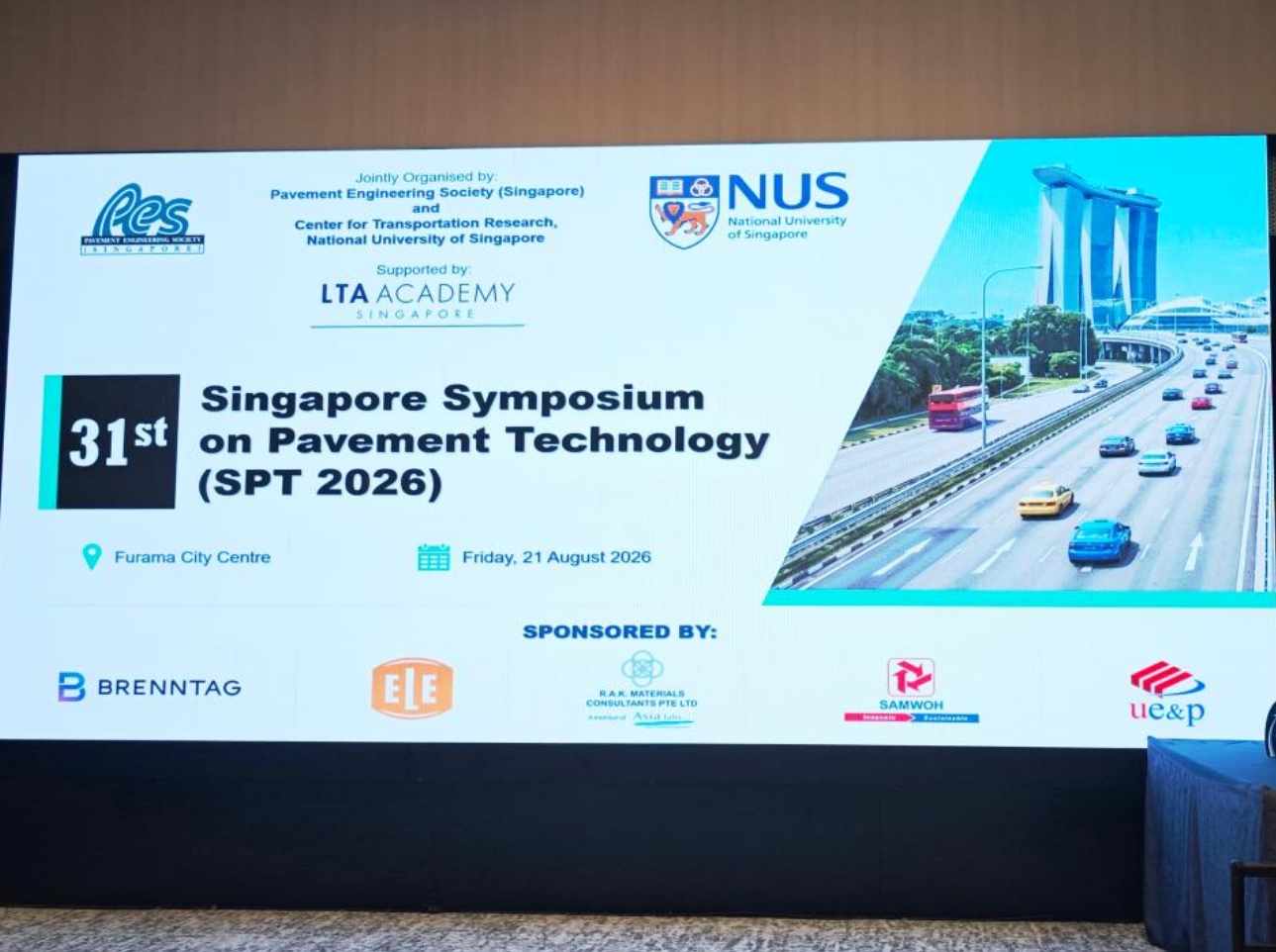
SPT 2026: Bringing China's Road AI Innovations to the International Stage
Showcasing Chinese Innovation at a Leading Pavement Engineering Symposium in Southeast Asia
Co-organized by the Pavement Engineering Society (PES) Singapore and the Centre for Transportation Research (CTR) at the National University of Singapore, with support from the LTA Academy of Singapore's Land Transport Authority, SPT is an annual event that brings together leading expertise in pavement engineering across Southeast Asia.
This year's symposium attracted experts, academics, and industry representatives from Singapore, Malaysia, Sri Lanka, and various regions of China, including mainland China, Hong Kong, and Taiwan. Discussions covered a broad range of infrastructure sectors, including roads, airports, and ports, making the event one of the region's leading platforms for knowledge exchange and technological advancement in pavement engineering.
At the invitation of the symposium organizers, Streamap was represented by a delegation comprising Kevin, Head of Overseas Marketing; Alex, Overseas Marketing Manager; and David Chen, Chief Engineer. The delegation participated in several technical sessions and engaged in in-depth discussions with international industry professionals on emerging technologies and future directions in pavement inspection and maintenance.
Keynote Presentation: How AI Is Transforming Traditional Road Inspection
During the symposium's key session, Application of AI in Road Maintenance and Management, David Chen delivered a keynote presentation titled How AI Is Transforming Traditional Road Inspection. He shared Streamap's technological progress and practical experience in developing and deploying AI-powered road inspection solutions at scale.
"The industry's biggest challenge is no longer simply collecting images. It is turning those images into reliable, traceable data that can support maintenance decisions."
The presentation opened by addressing several challenges shared by road authorities and maintenance operators worldwide: road networks are expanding faster than available inspection resources; infrequent inspections can result in missed maintenance opportunities; inspection results from different operators are difficult to standardize and compare; and on-site inspection activities can disrupt normal traffic flow.
In response to these challenges, Streamap has developed a four-stage technological approach, refined through real-world engineering applications.
Phase 1: Detection and Measurement
By combining front-facing cameras with real-time detection and tracking, camera calibration, and inverse perspective mapping (IPM), Streamap's solution enables both qualitative and quantitative pavement distress assessment, with lane-level positioning. The system achieves detection accuracy of over 90% for common pavement distresses.
Phase 2: High-Resolution Pavement Reconstruction
To overcome the limitations of front-facing cameras in capturing millimeter-scale cracks, Streamap employs rear-facing camera perspectives and semantic segmentation to reconstruct entire traffic lanes. This approach addresses key challenges in accurate positioning and duplicate detection. By comparing inspection results across different cycles, operators can also directly assess the effectiveness of maintenance and repair work.
Phase 3: Long-Term Road Asset Management
Through dense feature matching and 3D reconstruction, Streamap enables the unique identification of road assets and facilities. This provides the foundation for city-scale 3D asset mapping, supporting asset inventory, change detection, and targeted maintenance work-order assignment.
Phase 4: Beyond Visible Light
By exploring multimodal sensing capabilities beyond conventional RGB imaging, Streamap is expanding the scope of road condition assessment. This approach aims to better identify geometric pavement distresses, including cracks, settlement, and rutting, paving the way for the next generation of road digital twins.
David Chen concluded his presentation with three key insights drawn from engineering practice, which resonated with the audience:
Better data matters more than bigger models.
How data is processed directly determines its value.
Road AI is evolving into a comprehensive multimodal perception system.
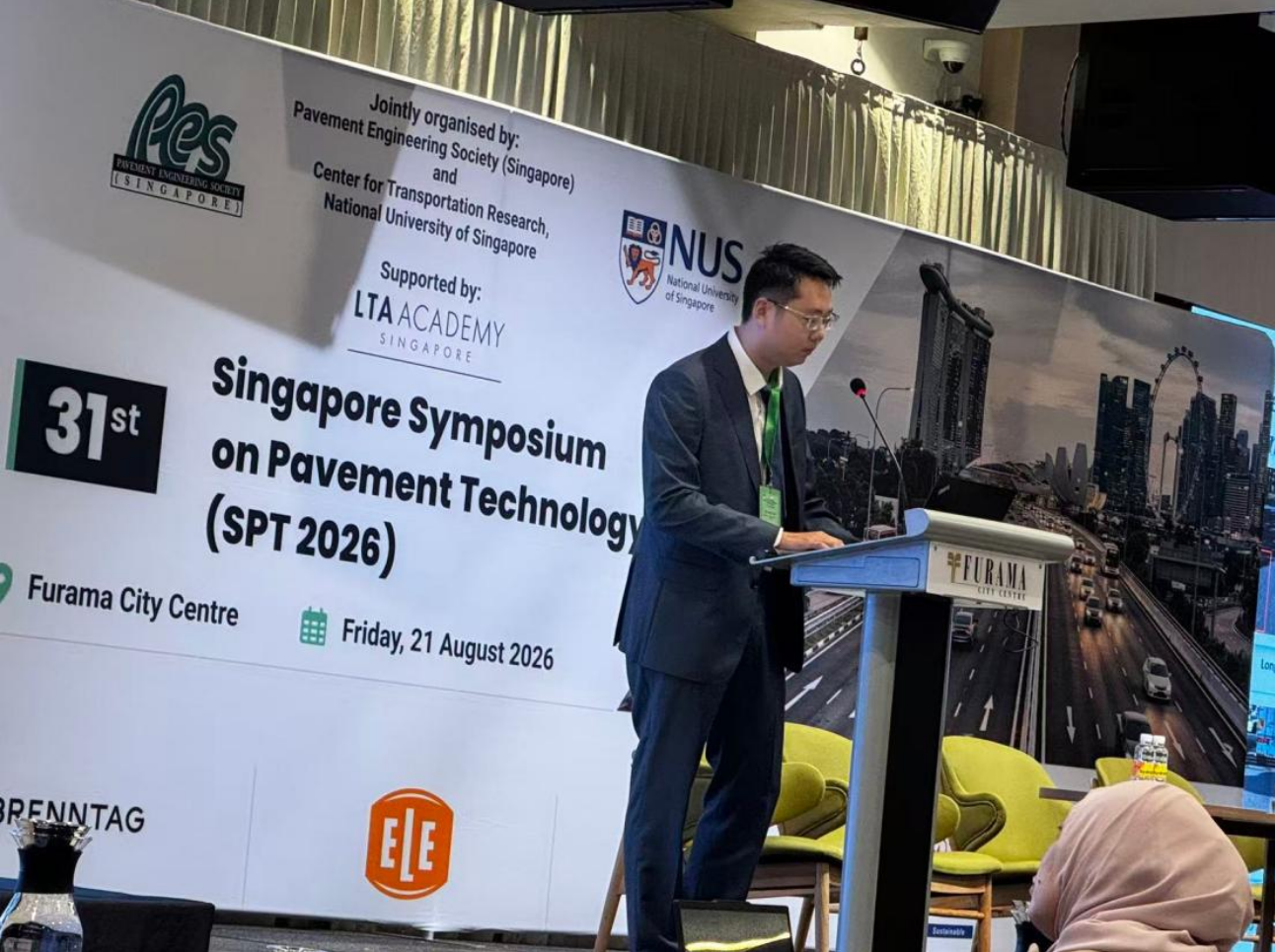
Photo caption: Chief Engineer David Chen delivering his keynote presentation.
Engaging with Global Peers: Recognition of Streamap's Full-Stack Capabilities
Following the presentation, several international experts and industry professionals approached the Streamap delegation for further discussions. Streamap's integrated capabilities across AI algorithms, hardware, and software platforms attracted strong interest and positive feedback from participants.
During the symposium, the delegation also had the opportunity to meet Dr. Low Boon Hwee, Chairman of the Pavement Engineering Society Singapore. Dr. Low expressed his appreciation for Streamap's technological work and practical applications. Both sides exchanged views on the opportunities and future prospects of digital transformation in road maintenance.
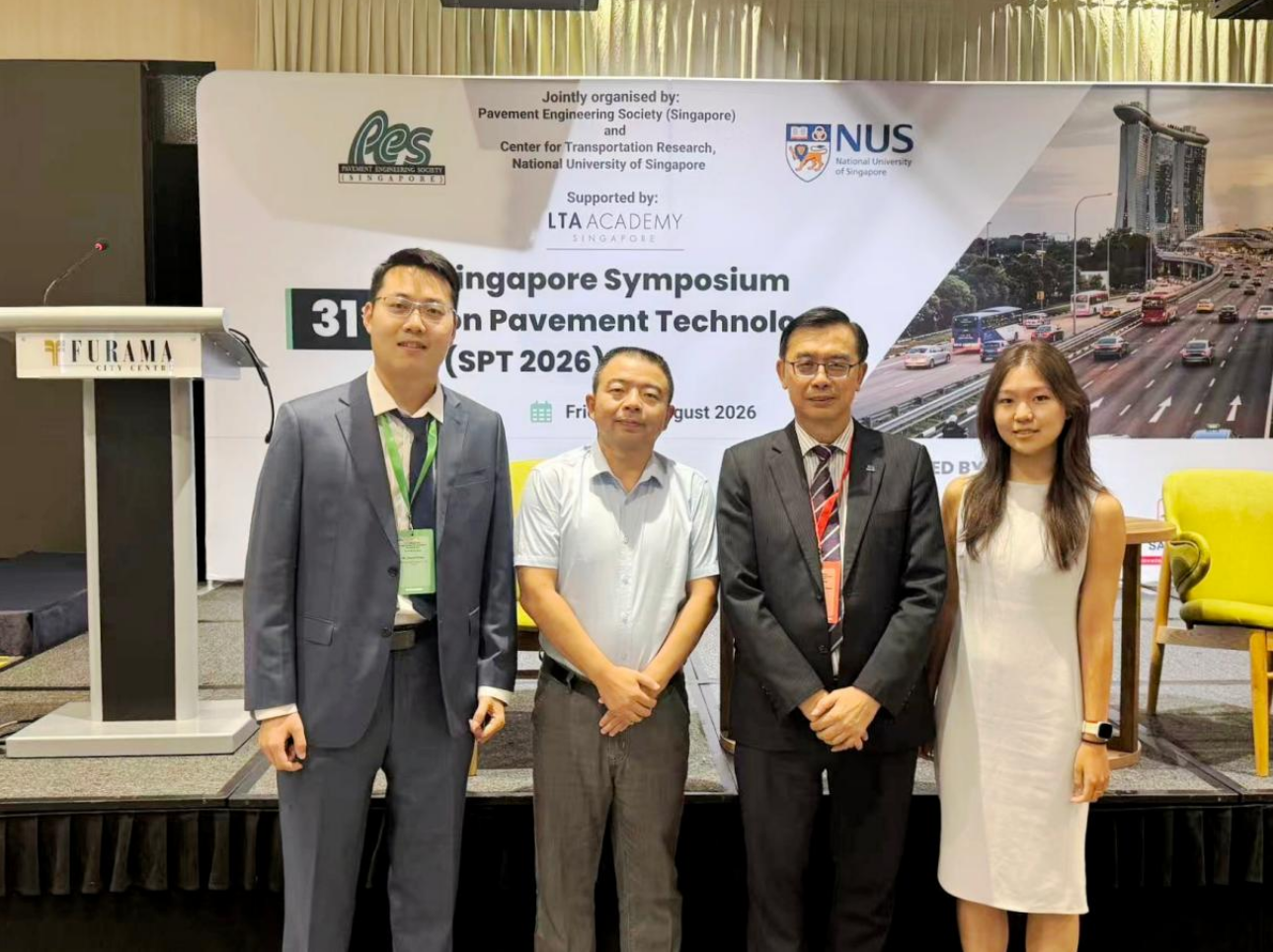
Photo caption: From left: David Chen, Chief Engineer; Kevin, Head of Overseas Marketing; Dr. Low Boon Hwee, Chairman of PES Singapore; and Alex, Overseas Marketing Manager.
Global Challenges, Shared Needs: The Transformation of Road Maintenance
Beyond the technical discussions in Singapore, the symposium highlighted a broader issue facing the global road maintenance industry: the growing need for digital transformation.
As David Chen emphasized in his presentation, the key challenge is no longer simply collecting images, but transforming them into reliable, traceable data that can support maintenance decisions. This is a challenge shared by transportation authorities and road maintenance operators around the world.
Overseas Markets
In emerging markets, rapid urbanization is driving growing demand for more accurate and efficient road network maintenance.
Meanwhile, in developed markets across Singapore, Europe and North America, aging road infrastructure and extensive existing networks are placing increasing pressure on maintenance resources. Traditional manual inspection methods are often costly and inefficient, prompting countries worldwide to seek more digital and intelligent approaches to road maintenance.
Despite this growing demand, proven AI solutions capable of large-scale deployment remain relatively scarce.
The Domestic Market
In China, the total length of expressways has exceeded 199,400 kilometers, while national and provincial trunk highways extend for more than 700,000 kilometers. With continued investment in new transportation infrastructure and smart highway development, the transition from manual visual inspections and handwritten records to AI-powered road inspection has become an increasingly important industry trend. China's road maintenance market, worth hundreds of billions of yuan, is also expanding rapidly.
However, practical challenges remain, including low detection accuracy, high false-positive rates, unreliable positioning in tunnels, and data silos. These issues continue to hinder the industry's deeper digital transformation.
Many of these challenges cannot be addressed by algorithms or hardware alone. Labor shortages, inconsistent inspection standards, positioning failures in complex environments, difficulties in converting images into actionable maintenance data, and disruptions to traffic during inspections are all interconnected, systemic issues that require an integrated approach.
With its vertically integrated, in-house R&D capabilities spanning data, algorithms, hardware, and supply chain, Streamap takes a full-stack approach to addressing these challenges. By transforming pavement images into reliable, traceable data that supports maintenance decisions, Streamap helps bridge the gap between road inspection and actionable maintenance management.
This integrated approach is central to the ability of Streamap's solutions to meet international industry expectations and gain recognition from overseas experts.